Wednesday, February 4, 2015

Oh, the Weather Outside is Frightful


It's that time of year again . . . time to whine about the cold and snow in Chicago while training for the Bataan Memorial Death March, which takes place in March . . . in the desert. Last year was so cold (I would not have been an effective soldier during the Battle of the Bulge), that I managed only to do my long weekend training walks, not the shorter weekday ones - the ones that build momentum and body readiness. The prior year, I talked a lot about feeling disingenuous complaining about the ice and snow and looking for open bathrooms and water, while thinking about the men I hoped to honor during the Memorial marathon. Those Bataan marchers walked without food and water in the hottest part of the year in the Philippines. They didn't get to stop for bathroom breaks, nor did they get Starbucks as a reward for walking a mere 20 miles or so; they walked 80.

During this, my third year of training, I feel more philosophical about my physical discomfort - not beating myself up because I have warm clothing and resources my grandfather and his colleagues lacked. I'm using the solitude of my walks, short and long, to meditate on what my role is in life - certainly not that of a battle-weary soldier - but of a person who I hope has something to give, just by my example.

And yes, that's me in the purple windpants, orange jacket, and pink down vest - because it's wicked cold out there.

Monday, April 21, 2014

I Never Walked Alone

At Mile 15 in last year's Bataan Memorial Death March, you came to walk beside me. I could see faint images of you on either side of me. The only sound, however, was that of my feet on the dusty rocky trail at White Sands Missile Range.

You only stayed a moment, but after you left, the bending bowing cactus and pinon accompanied me. They lined the road much as the Filipino women and children must have done over 70 years ago - trying to provide food and water.

I wanted pictures of you to take as a blessed remembrance, but (ironically) for me, had no camera.

This year, once again, as the soldiers left me, you appeared and I was able to capture your presence. Thank you for being there.


Monday, January 27, 2014

You Can't Stop Me Now

I'm trying, lord I'm trying . . . but Chicago's winter has wreaked havoc HAVOC I tell you, on my training schedule for this year's Bataan Memorial Death March at White Sands Missile Range in March.

This weekend was supposed to be an 18-mile training walk - hah! I'm so far behind that all I could manage was a somewhat sprightly (and it got less sprightly) 14-miler. Thankfully, there was mud, snow, and yuk to tramp through giving me the feeling that I was sort of training for the desert sand. Also thankfully, the Lakefront was clear of ice - that does not help in training at all.

I am grateful that this year, I'm not quite as fearful as I was last year when I had absolutely no experience with either the marathon-distance march or the desert. I feel like I may be on a roll and the days inch towards warmer weather, so hopefully all is not lost.


Monday, October 7, 2013

It's a Small World, After All

Oh man, I knew it had been awhile since I posted . . . but snow? Sheesh; here it is October, and that scene is not too far off. It's also annoying as hell when people state the obvious, "It's been a long time since I blogged," so I won't.

Suffice to say, it's been a crazy busy wonderful adventure-filled year - and it's not over yet!

I did that walk mentioned in the prior post. My snow/sand training proved invaluable in the desert of White Sands, NM. I'm not going to say it was easy; it's never easy walking 26.2 miles, but I did it with a smile on my face (mostly because of the iced coffee I carried along with my water). How can anyone be outside (or inside for that matter) for 8 hours without coffee?

I started the march with a survivor, Ben Skardon, and Ben's Brigade, a group that walks with Ben as far as he can go. At 95, he made 8 miles. He remembers my grandfather and his shows in Cabanatuan. Every bit of new information I get brings Zero more alive for me. And, makes his story more amazing.


As I walked, mostly in solitude, I thought about the soldiers who were forced to do the Death March. I listened to feet shuffling over gravel and sand and the murmur of other marchers. I don't know if my grandfather and Ben were allowed to talk . . . I should ask.

A number of the soldiers making the trek were packing 40+ pound rucks, some were running the entire marathon, others walking. Still others, very young, and clearly unaware of the "wear your shoes at least 100 miles before attempting a marathon," had fallen by the wayside, leaving bloody socks and band-aids. It occurred to me, that had this been the "real" march, they would have been bayoneted or beheaded.

At one point, deep into the march and the desert - maybe mile 18 - I saw the huge bent plants; they looked like women reaching out to help the soldiers. And that's when I felt it. I felt the men, ghosts all of them, walking next to me, in front of me, and beside me.

Monday, February 25, 2013

Walking the Walk


So what got me to a 20-mile walk through snow and sand on the Chicago lakefront? Clearly it wasn't the weather (see "snow" above). It wasn't the company; I was walking alone. Not too many folks were duplicating my 17 degree journey.

Just why the hell was I freezing my ass off and rubbing blisters?

This is where the phrase, "It's a long story" always comes up. And in my case it's true. This story started 71 years ago on the Bataan Peninsula in the Philippines. Thousands of prisoners, many of the U.S. soldiers, of the Japanese were about to embark on one of the most heinous events in WWII - The Bataan Death March. And this has to do with me in 2013 on a frigid Chicago day?

My grandfather was one of the U.S. soldiers; he had no idea he was about to be forced to walk almost 80 miles.

The War Goes On

The title of this post is more metaphorical than real to my life. Although there do seem to be conflicts on a daily basis that permeate our country. Most don't involve guns or drones, but words, which unfortunately can be more harmful.

I've recently engaged in an activity that indirectly parallels my project with my grandfather's tenure in the Philippines. During my research I stumbled on a site where the editor asked for volunteers to transcribe affidavits presented against Japanese war crimes. I contacted the editor, not even knowing if it was still an active site; it is. He has sent me three different sets of legal proceedings to transcribe from aging copies to computer.

What I am finding are missing pieces to my grandfather's war experience. I have an affidavit from him describing went happened during his internment; however, this new information is specific to incidents and therefore some how more immediate.

Monday, June 11, 2012

Planes, Trains, and Automobiles

"I've been from Tucson to Tucumcari"
Lowell George

I didn't actually go from Tucson to Tucumcari; however, I did go from Borger, Texas THRU Tucumcari, New Mexico on my way to Albuquerque along portions of old Route 66.

My trip was for the purpose of sharing the middle-school primer I had written about my Grandfather, Zero Wilson, and the Mighty Cabanatuan Orchestra and Art Players. I had received a grant from the Descendants of the American Defenders of Bataan and Corregidor and part of the requirement was to present what had been funded with former POWs from the Bataan Death March and their assorted relatives and friends.
 
I'm not sure what I expected, but not on my list was to find another family be a part of. And find a family I did. There truly are only seven people in the world; not only did I meet other military kids (although, we can no longer officially be called "kids"), but I met people I had read about and people who knew about Zero. We spoke a common language and had a common background. Difficult to find I think, even with one's own family. It was emotional and exciting.
 
My presentation was well-received. My workbook required some edits based on audience feedback. My primer found a couple of new homes by way of educators I met.

No one found the typo on the title of the workbook until two weeks later when a 6th grader busted me. But that's a story for another day.


Tuesday, May 1, 2012

On the Road Again

My trip from Chicago to Albuquerque via Borger can hardly be used in the same sentence as The Bataan Death March. Nevertheless, the journey that got me where I am today has included the heroes of the march; their words, their photos, their drawings, their memories.


My writing and research have been done. My middle-school workbook proof has been printed. And, my PowerPoint presentation for the Descendants of the American Defenders of Bataan and Corregidor is ready to present to the grant committee.

I thought I knew a lot of my grandfather's story. What I didn't know where the stories written about him and the prisoners who participated in The Mighty Cabanatuan Orchestra and Art Players - true artists all.

Who could know the indomitable spirit and survival instincts that allowed these men to share with each other their talents.

The conference in Albuquerque begins tomorrow; I have no idea what to expect, but I'm sure I'll meet survivors and other descendants like myself. I'll hear stories, see images, and be touched in ways I cannot imagine. I only hope my small contribution does the same.

Friday, March 2, 2012

Wounded Warrior

Those of you who have been following my Facebook posts over the last several weeks know that I was wounded in the battle called Chicago Winter - I slipped on ice, fell, and broke my right wrist. My write/right wrist and lower arm are currently ensconced in their fourth cast/splint. But things are improving - this particular cast is plastic, removable, and allows for occupational therapy to start immediately. All this means I should be as good as new . . . sometime.

Since I'm also working on a middle school project about the Bataan Death March and Cabanatuan prisoner of war camp, I cannot help but compare my medical incident and accompanying care with what must have been 100s of like and worse wounds and breaks than I suffered. These men would not have had the advantages of a taxi to the ER, or in many cases, even a doctor. They were forced to march 80 miles and were executed if they faltered.

Photo Credit: National Museum of the Air Force


I know the disfigurement of my wrist post-break; I had 7 hours in the ER to stare at it before it was set and splinted. I also know that while I had pain (I'd say 500 out of 10), I was given pain medication to ease my torment. I would venture to say that any wounded soldier on Bataan fortunate to only have an arm fracture kept his mouth shut and his feet moving lest he be deemed too damaged to continue and summarily killed. I suspect that men with broken legs or backs kept themselves as upright as possible in order to take even one more step.

I write this entry to put my wrist into perspective, to put a lot of my life into perspective. I often fear that I take for granted the simple and expedient ways to "fix" my life, to make myself more comfortable. Perhaps I can recall this post the next time I complain about being out of Motrin, or having to walk to the bus in the rain, or yes, even the battle I call winter.

Wednesday, January 18, 2012

Hoarder or Collector


In my writing workshop, we were asked to write about things we've saved that perhaps should have been thrown out. In the ten minutes we were allowed to write, I came up with:

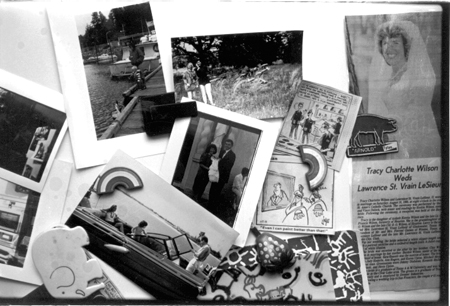
  • Every postcard anyone has sent me
  • Every letter ditto ditto ditto
  • Every card celebrating every event in my life
  • Most emails since 1995
  • Many bad photographs of other people's children*
  • Many photos, good and bad, of other people's vacations
  • Most [Houston] Chronicle Sunday brides from the last 20 years
  • Boxes of books I will never read, but will go in my someday library to fill shelves
  • Every thing that has ever been on a refrigerator of mine, including the magnets 
I guess I save words and images.

For what? Because I can? Or because of the multi-volume biography that someone will write about me someday?

Postcards are understandable; I keep them in a big basket, and long-time friends and family pick through them to read about others' travels. Postcards once spawned one of my better essays - published even.

But really? I used to save every art magazine I had, every canister of sequins, every craft kit known to man because maybe . . . someday . . . I'd be an art teacher and I would need all of this for class projects. Guess what? I am never going to be an art teacher; at least not an everyday 9-5 kind of teacher, and anything I plan to teach at this point has vastly outgrown a canister of sequins.

Am I saving cards and letters as proof that people care about me? Proof that I exist for someone? Now as I wander into every-other-week-therapy topics, I think I'll stop.

And did I mention that I also save dead roses?


*If you are reading this and you have sent me a photograph of your child, I am not talking about you.

Sunday, December 18, 2011

Math and Art: Word Problems for the Visual Learner

My math education did not go well at all. When, in 3rd grade, we learned "times tables", I had such problems that Miss Finch, a first-year teacher, called my parents in to let them know they had better think of technical school for me rather than college. While calling a 9-year-old an intellectual loser is a bit presumptuous, Miss Finch had me dead to rights on my math skills.

Miss Finch's Class Photo
 I would also guess that I have thought of Miss Finch over the last [you figure it out] number of years about a bazillion times more than she has ever thought of me. It's time to rid myself of the resentment at last.

While I'll go on to say that not only did I finish college, I did so in 4 years, one summer, and 8 majors. In addition, I went on to get a Masters in Fine Arts in Photography. You wondered when I'd bring in the art, didn't you? So here's the deal, while math scares me and those who know me who no longer ask me to add numbers, I do use math - complicated algorithms - on a daily basis. Most of my art takes place on the computer in a program called Photoshop. There I can create images, manipulate them, assemble photomontages, and ready photos for printing on textiles.

I will confess to not knowing one single complicated algorithm, but the point is, I can use them to my advantage - take that Miss Finch. I also know that I can ask the scientists with whom I work to draw a simple flowchart or diagram to clarify their research for me in order to better edit it.

Where is this all going? Let's call it a short essay on recognizing that skills of any type range along a spectrum and it's important to know how you learn as well as how to explain what you know to others. I'm getting ready to impart some WWII art/theatre/history knowledge to some really smart middle-schoolers and I need to remember that some of them will be good in math and some in art, and that all of them will most certainly teach me something.

Monday, November 14, 2011

Daughters, Sisters, Friends

I took my family to the Vietnam Wall on Friday, November 11, 2011.


There were a lot of "relatives" and "friends" along. I use the quotes because while the Vietnam Vets had their brother Vets with whom to share the occasion, I am not a Vet. I am a daughter of a name on the Wall. I couldn't share stories of war, of injuries, of death. I did know what SOS meant as a breakfast meal.

I did find other daughters, who I find are now my sisters. We had never met before Friday, but we found we had stories to share; similar stories of war and of death. Who knew? When you're the only person you know who has a Father killed in a war, you're the only person you know - there's typically no clubhouse.

As for the friends I mentioned in the title of this post . . . I have two new ones as well. One is my bus seatmate. A man about my age, did his duty in Vietnam and moved on with his life. Friday was the first time he had ever seen the Wall. I don't know if he was scared; he was sometimes quiet and sometimes very talkative. We sat together during the ceremony and made the occasional comment to one another. He reminds me of me, my husband, my father. The second new friend is a high school classmate. I have not seen her in over 40 years, but she made the over one hour drive into D.C. to attend the ceremony and meet me at the wall. If that's not friendship, then I don't know what is.

There are good good people in this world.

Thursday, November 3, 2011

No One Wall is Big Enough

to list even one name of a soldier killed in war . . . any war. I'm talking about several walls, some large, some small, but each carrying the names of men and women killed in Vietnam.


The photo above is from a Wall here in Chicago, just south of the river, almost touching the river; lots of green, lots of traffic noises, and the occasional jogger. Today it was the scene of a celebration of remembrance - for the men and women of Illinois who made the "ultimate sacrifice." There are more than 2900 from Illinois and 900 of those from Chicago.

Today's celebration, The Call for Photos, is a collaboration between The History Channel and the Vietnam Veterans Memorial Fund. This initiative has as its goal a photograph for every name on the Vietnam Wall - over 58,000 of them. These photographs along with other memorabilia will be housed at the soon-to-be-built Education Center at the Wall.

Readers of this blog and those of you who know me probably know by now that my Father was killed in Vietnam in 1967. His name is on Panel 25E, Line 94. I wasn't much interested in Vietnam until I got closer to the age he was when he was killed. Then, it became imperative to find a way to make sense of someone my age dying in a war; I use art and writing - it probably makes less sense now than it did. I'm almost 20 years older than my Dad was when he was killed. One of the speakers at the ceremony today was born the year I graduated from high school; his Father fought and came home. It wasn't until after the son had served three tours in Iraq that he could sit and have a beer with his father and understand. The son said that he still doesn't feel like he gave as much to his country as his father did. He's a nice young man, I met him, he's the same age my Father was . . . time has its own sense of humor and irony.

So, along with the art, I've been involved with a group called Sons and Daughters in Touch. These are all kids, and now grand kids, who are related to a name on the Wall. In Houston in 1992 there was a huge celebration. It was close to the 20th anniversary of the end of the war and the 10th anniversary of the Wall. I got to ride in a parade, I got to represent a lot of kids. I heard people cheering for the same men and women who were disregarded when they came home from Vietnam. Now we're closing in on the 40th anniversary of the end of the war and the 30th anniversary of the Wall.

I'm still not quite sure how I got involved in today's event except that I answered a notice for The Call for Photos and someone called me back. To be honest, I didn't know there was a Wall here in Chicago until three weeks ago when this all began to unfold. But if I can share my photos and my stories I will. Today there were lots of those around. A group of maybe 30 people, mostly Vets, and me with a caring friend, sat in the pouring rain to listen to speakers, mostly politicians - but interestingly enough, most of them Vets. They got to sit under a tent, we sat under enormous umbrellas provided by The History Channel.

I was impressed and moved by a lot today - the Chicago Army Recruiting Battalion Color Guard who presented colors (they didn't have large umbrellas) and the 85th Army Band from Arlington Heights who played The National Anthem (no umbrellas) - but ultimately by a woman who sat in the back row of speakers. She was an Army nurse. She served in Vietnam. She was at the field hospital in Pleiku where my father first went after he was injured. I showed her a photograph and told her I didn't expect her to remember. She was silent for a moment before she told me that every soldier who came through her hospital was loved.

Wednesday, October 26, 2011

When Will They Ever Learn?

                                             Photomontage: Gail F. Wilson

I have never considered myself a particularly political person, but my views on war are becoming more concrete and clear as I get older (and wiser?). I recently became involved in a cool project, sponsored by History and the Vietnam Veterans Memorial Fund, whereby every name on the Vietnam Wall will have a photo associated with it. A gentleman involved with the project called to interview me about my experience of losing my dad in Vietnam. He then went on to question me about our more recent conflicts. While it's difficult to answer the question, "Knowing what you know now, would you still have supported [fill in the blank]?" what I can answer is there has got to be more thought given to our intentions, our expected consequences, and any potential unintentional consequences.

I recently heard a reporter state that Iraq and Afghanistan can never happen again, as in, they won't because we'll talk things through. Based on my increasing jaded and cynical outlook on war, I don't believe that and here's one reason why. In 1958 my Father was sent to Vietnam as an "Advisor", he went back 10 years later and was killed. Our country just sent 100 "Advisors" to Uganda . . . what are the consequences? Are they there to "talk"? Or are they there to stay and escalate in numbers?

Monday, October 10, 2011

Lessons on My Ladder to Dreams

                                         Elizabeth Borden Goodloe, circa 1932

Swimming
Ballet
Tap
Woodcarving
Piano
Ballet
Riding
            Western
            English
            German
Ballet
Elocution
Square dancing
Guitar
            Classical
            Folk
            12 string (acoustic and electric)
            Bass
Charm school
Typing
            Manual
            Electric
            Word processor
            PC
Driving
Singing
Ballet
Tennis
Bartending
Framing
Knitting
Gardening
Patio-making
Photography
            Pinhole
            35mm
            2 ¼
            Large format
            Super 8mm
            Polaroid
            Disposable
            Digital
Jewelry making
Cooking
            Mexican
            French
            Italian
            Pastry
Salsa
Drawing
Ballet
Calligraphy
Writing
Surfing

Shouldn’t I be able to do a pliė?

Tuesday, September 27, 2011

The Corps

My husband says you have become my friends. Can I have friends who are dead?
I know a lot about the wall of you, albeit dressed alike. One West Pointer after another - the Long Gray Line.
In your yearbook every one of you has condensed four years of your life into a paragraph.
I know the activities in which you participated:
          Fencing
          Track
          Pistol
          Rifle
          Press Representative
          and girls
I know your nicknames:
          Zero
          Doo-Daz
          Boomer
          Rads
          Smo
I know one of you piloted "Puff the Magic Dragon".
I know one of you thought Cam Rahn Bay was in North Jersey.
I know one of you was my grandfather; one of you was my father.

Wednesday, September 21, 2011

Beautiful Young Men I


I have been sitting here, staring at you, waiting for you to tell me what to say. You’re going to make me tell a story aren’t you? I use the phrase “a story” rather than “the story” because any tale I tell will be made from your memories, your musings, and my questions about my part in all of this.
My grandfather starts my journey with his diary, buried in the Philippines, discovered later, finally transcribed by me.
Forty-one of you served in the Philippines. You were at the first American surrender. You marched in the Bataan Death March. Some of you made it to a POW Camp. Some of you made it to a Hell Ship. Some of you almost made it home; one of you did.
I know all of you men; you appear on a roster completed by my grandfather in 1946. I know how far you made it in your journey. I know some of your stories from journals and documents collected at the end of World War II.
After 1942 you got a respite, you Beautiful Young Men. But, then from 1945 through 1952 your numbers decreased in Korea – the proxy war.
And then Vietnam; the first American Advisors were there in 1958, less than a thousand. My father was one.
The word “escalate” means to become more intense or serious; those were the looks that passed between my parents in the mid-1960s as U.S. involvement increased.
The deaths started happening – random, senseless, from a sniper or helicopter crash, a grenade.
I know you too, not as well because I don’t have your diaries or documents, but I know your sons and daughters, and I am one of you.

Monday, September 19, 2011

"The War Department Won't Promote Dead Men"

Quote from correspondence between Zero Wilson (my Grandfather) and General George Parker, 23 May 1946.

Really? No promotions for dead men? But what if they were supposed to be promoted before they were dead, they just happened to be incarcerated as a POW? For the War Department in 1946, and I suspect today, it doesn't matter - dead, then no promotion.

It's an interesting concept, promotions, and I suspect it is as similar in the corporate climb to success as it is in the military. My Grandfather, along with his best friend, "Dinty" Moore (at West Point everyone gets a nickname) and many others received what are called battlefield promotions. Available to enlisted personnel as well as officers, these promotions are typically awarded for behavior in combat. What they don't tell you is that after the war, the War Department may decide to take yours away. So Granddaddy and Dinty got demoted in 1946 after all their hard work (rather an understatement for POW Camp, the Hell Ships, and Manchuria).

Promotions are awarded at specified times throughout a career; the better you do at your job, the more responsibility you take on, etc. helps in the promotion decision. I find it ironic that while my Father loved his country, wanted nothing more to be than an Army Officer, expected to receive a promotion upon his return from Vietnam. Unfortunately, he was killed in action and we all know what the War Department says about Dead Men.

Saturday, September 17, 2011

BFFs

Curt came to see me at Ragdale yesterday. We had lunch in Lake Forest and then walked back here so I could show him my studio. He asked about every single image I had on the wall, and I showed him the big-ish installation piece I'm working on. As I continued talking about the men on the wall, Curt said, "You've become friends with them." I guess I have. In some cases I still am in contact with them, in other cases I know some of their stories, and some I've just met these past two weeks.

My dad had two best friends, Ted Lilly and Frank Loyd. They practically grew up together; they left the Philippines together in May 1941 while their dads stayed behind. Chris Schaefer, in Bataan Diary, tells the story of what happened to the senior Loyd during the war, I write about my grandfather, but I'm not sure about the senior Lilly's story - I'm sure there is one. But back to the boys. They sailed home to San Antonio together, they went to high school together, and they were in the same class at West Point. BFFs, right? Ted and Frank were killed in Korea right after they graduated. My father was killed in Vietnam in 1967. I guess depending on what you believe, they will always be BFFs. Rest in peace all of you.

Thursday, September 15, 2011

"I never have any problem getting enthusiastic with a good song and a good band"

Waylon Jennings, originally from Littlefield Texas, said this . . .  who knows when. But I wanted a good Texas quote to accompany this photo of the Cabanatuan Orchestra taken sometime after 1942, photographer unknown.


Based on Chuck Kaelin's letter to my D-day, I can tell you the names of some of these fine musicians: Johnny Katz, Director; Fran Boyer, Arranger; "Pappy" Harris and Eddie Booth, Pianists; Darnell "Red" Kadolph, Drums; Larry Parcher and Martin "Si" Silas, Trumpets; Kenny Marshal, Sax; Clare Kuncl, Trombone; Mel Reinhart, Boyce Strickland, and Chet McClure, Guitars; Louie Bauer, Miles Mahnke, Hank Rule, and Chuck Kaelin, Vocalists.

Evidently, the musicians hummed, whistled, or sang any bits of songs they knew, while Fran Boyer captured it on paper. Greats, such as The Dorsey Brothers, Debussy, Wagner, Benny Goodman, and Glen Miller "appeared" on a regular basis. Also included were excerpts from Porgy & Bess and Rhapsody in Blue.

Second trumpet from the left looks exactly like I remember my Grandfather and I had always imagined it was him, and while Chuck's document would have me believe otherwise, I'd still like to think that he picked up a trumpet one day and blew.